
Cable Assembly vs Wire Harness: what’s the difference
Cable Assembly vs Wire Harness: what’s the difference (and which one do you actually need)? If you searched “cable assembly vs wire harness”, you’re probably trying to answer one of these questions: “What should I ask my supplier for so I don’t look like I’m ordering ‘that thing with wires’?” “Will this survive vibration, moisture, heat, solvents… or the reality of people being people?” “Is this a simple point-to-point cable, or a branching octopus of connections inside my system?” Here’s the answer upfront: A cable assembly is usually a point-to-point connection built from a cable (conductors inside a common outer jacket), often with connectors on the ends and sometimes extra protection (overmold, braid, shielding, sealing). A wire harness is usually a branching bundle of discrete wires (and sometimes sub-cables) that’s organized and routed using ties, tapes, sleeves, labels, clamps, and breakouts to connect multiple endpoints across a product. Also: the industry sometimes uses these terms loosely, and even standards acknowledge that people don’t always agree on the exact wording. So the practical goal isn’t winning a vocabulary contest. It’s specifying the right build and quality requirements. The quick definitions (no jargon left behind) Wire A wire is a single conductor (solid or stranded), usually insulated, used to carry power or signals. Cable A cable is two or more insulated conductors bundled together under a shared outer jacket. (Coax and twisted pairs count too: the point is the shared jacket and the “this is one cable” structure.) Cable assembly A cable assembly is a finished cable that’s been terminated (connectors, contacts, lugs, etc.), often with added protection: shielding (foil/braid) overmolded connectors strain relief boots sealed backshells or grommets abrasion-resistant jackets Think: “one cable that behaves like a component.” Wire harness A wire harness is a system of wires (and sometimes cables) organized into a defined shape to route signals/power through a product. multiple branches (breakouts) multiple endpoints routing and retention features (clips, clamps, tie mounts) labeling to make assembly and service sane Think: “the nervous system of the product, pre-packaged so installation isn’t chaos.” The real differences that matter in engineering and purchasing 1) Topology: point-to-point vs multi-branch Cable assembly: usually A → B (sometimes A → B → C, but it’s still basically a single run). Wire harness: typically A → B, C, D… with breakouts to multiple components. Practical example – A motor encoder to controller: likely a cable assembly. – The internal wiring of a machine with sensors, switches, and actuators: likely a wire harness. 2) Protection: “jacketed” vs “managed” Cable assembly: protection comes from the cable construction (outer jacket, shield) and add-ons like overmold or braid. Wire harness: protection comes from routing, bundling, and selective covering (split loom, braid sleeve, heatshrink at breakouts, tape wrap, conduit) rather than one continuous jacket over everything. Rule of thumb If the environment is harsh or the cable is exposed and moving, cable-assembly style construction becomes more attractive. 3) Assembly method: built like a component vs built like a map Cable assembly: easier to define as a single BOM item with a drawing that calls out length, connector A, connector B, and test. Wire harness: often needs a harness drawing / formboard layout (2D nail board style) defining branch lengths, breakout positions, tie points, and labels. 4) Installation: plug-and-play vs route-and-fix Cable assembly: installer typically plugs both ends and maybe adds a clamp. Wire harness: installer routes the harness, fixes it at defined points, then connects multiple endpoints. 5) Cost drivers: materials vs labor vs risk Cable assembly cost drivers: connector cost, shielding/overmold/sealing, testing (especially for high-speed). Wire harness cost drivers: labor (branching, dressing, labeling), documentation complexity, assembly time on the product line. The expensive part is usually not “wire.” It’s “human time, plus mistakes.” Harnesses can reduce mistakes and speed install, even if the harness itself costs more than raw wire. A decision guide you can actually use Choose cable assembly when you need: Robust mechanical protection and predictable durability A neat point-to-point interconnect High-speed signal integrity (twisted pairs, controlled impedance, shielding) Sealed interfaces (IP-rated connections, outdoor exposure) Frequent connect/disconnect cycles Choose wire harness when you need: Multiple branches to many components inside a product Clean routing inside an enclosure Reduced assembly time and fewer wiring errors Organized serviceability (labels, consistent routing) Custom length breakouts that match your mechanical design If you’re stuck between the two, ask this brutally simple question: Is the main job “survive the world” (cable assembly) or “organize the world” (wire harness)? Practical examples (so you can picture it) Example A: A USB-like external lead Device has a port, user plugs in/out, cable gets bent, yanked, dragged. You want strain relief, abrasion resistance, maybe shielding. That’s classic cable assembly territory. Example B: A control panel inside a machine Power in, E-stop, sensors, indicator lights, PLC I/O. Many endpoints, fixed routing, minimal movement once installed. That’s classic wire harness territory. Example C: A robot arm Robots don’t care about your feelings. They move, twist, and vibrate. Inside the arm: you may use a harness but with higher-grade sleeving, strain relief, and bend management. Between modules: you may use cable assemblies with robust jackets, shielding, and connector retention. In real products, the best answer is often: both, used where each makes sense. Common confusion traps (avoid these and you look experienced) “A harness is just a bunch of cables, right?” Not exactly. A harness can include cables, but the defining feature is branching routing + wire management, not “has multiple conductors.” “Cable assembly and harness are the same thing.” People say this casually, and some documents treat the words interchangeably. But in day-to-day engineering, the difference matters because it changes: how you document it how you build it how you test it what failure modes you expect “Harnesses are always cheaper.” Sometimes yes, sometimes no. The harness may cost more than loose wire, but it can save big money by reducing assembly time, rework, and miswires. What to specify so you get what you meant (not what […]
Výlet na Filipku
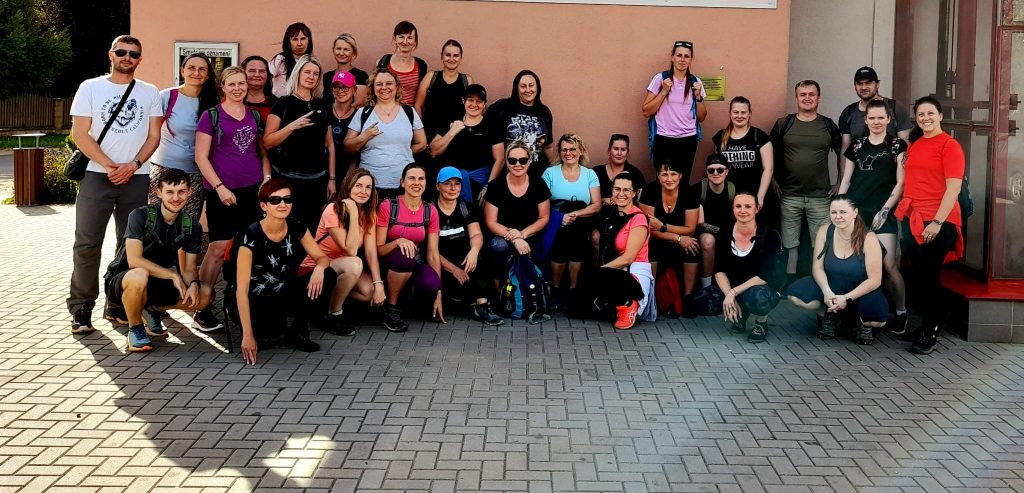
Výlet na Filipku Každý, kdo si chtěl naplno vychutnat podzimní atmosféru našich milovaných Beskyd, se k nám přidal na společný výlet na nedalekou Filipku. Lesy hrály všemi odstíny žluté, oranžové a červené, vzduch byl čerstvý a příjemně chladný – prostě ideální čas na to vyrazit ven a nechat hlavu vyvětrat. Společně jsme prošli krásnou trasu, cestou si povídali, zasmáli se a užívali si to, co dělá podobné akce tak výjimečné: pohodu, dobrou náladu a společný zážitek. Nešlo jen o samotnou cestu, ale o tu skvělou atmosféru, která se vytvořila díky lidem, co vyrazili s námi. Výlet na Filipku nám tak připomněl, jak fajn je občas zpomalit, nadechnout se a strávit čas v přírodě s lidmi, se kterými je radost být. Už teď se těšíme na další společnou akci – protože když se sejde parta nadšených lidí, vznikají chvíle, které stojí za to opakovat. Applications & Use Cases for Each Těšíme se na příště!
Den zdravého životního stylu
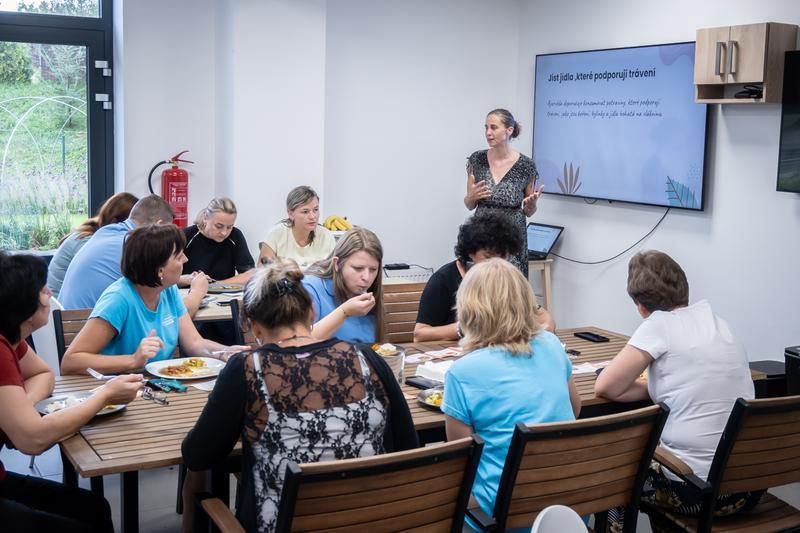
Zdraví a pohoda našich zaměstnanců je pro nás důležitou prioritou. V dnešní hektické době jsme se rozhodli našim zaměstnancům nabídnout pohled, jak si najít chvilku pro sebe a příjemně ji využít. Zároveň měli možnost vyzkoušet 5 zdravých jídel a dozvěděli se, jak jídlo ovlivňuje fungování našeho organismu.
MDŽ 2024
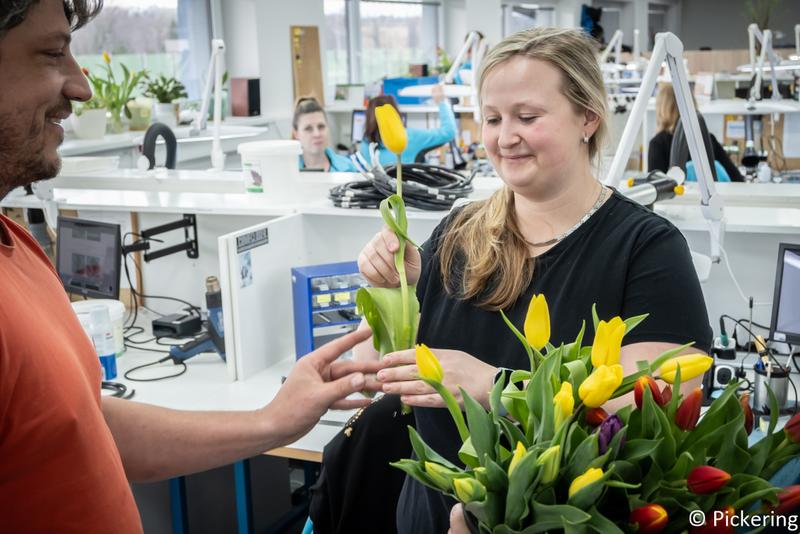
Mezinárodní den žen jsme letos společně oslavili v příjemné atmosféře, kterou provázela vůně čerstvých cupcaků a milá přítomnost našich kolegů. Sladké občerstvení dodalo dopoledni lehkost a slavnostní nádech, díky čemuž jsme si mohli užít tento významný den opravdu naplno. Oslavu doplnily také jarní tulipány, které rozzářily stoly i kanceláře a vnesly do prostorů barvy, energii a optimistickou náladu. Každé pracoviště díky nim získalo svěží jarní atmosféru a připomnělo nám, že i malé detaily mohou vytvořit příjemné prostředí. Setkání bylo nejen příležitostí k oslavě Mezinárodního dne žen, ale také k zastavení, poděkování a vyjádření vzájemné úcty. Společně strávené chvíle nám připomněly, jak důležité je budovat prostředí, kde se všichni cítí váženi a oceňováni.
Ponožkový den – Světový den Downova syndromu

Nebáli jsme se být jiní – a tak jsme si v tenhle speciální den každý nazuli dvě úplně jiné ponožky. Barevné, praštěné, prostě takové, že by se i jednorožec zastavil a řekl „respect“. Tímhle malým gestem jsme zároveň udělali velkou věc. Podpořili jsme našeho Vojtíška, pro kterého znamená každá minuta s koňmi obrovskou radost i posun. Díky hipoterapii ve stáji Chewal může objevovat svět s větší lehkostí, jistotou a úsměvem. A právě proto jsme dnes chodili „každá noha jinak“. Ne proto, že jsme zapomněli prát – ale protože jsme chtěli ukázat, že být jiný je v pořádku a má to sílu. A když ta síla pomůže jednomu malému bojovníkovi zažít další den radosti v sedle, stojí to za to každou ponožku navíc.